Apartment defects: what your OMC should be doing right now
Two State schemes, one Bill not yet introduced and tens of thousands of owners waiting. The work an OMC can do before the funding opens decides how fast it moves.
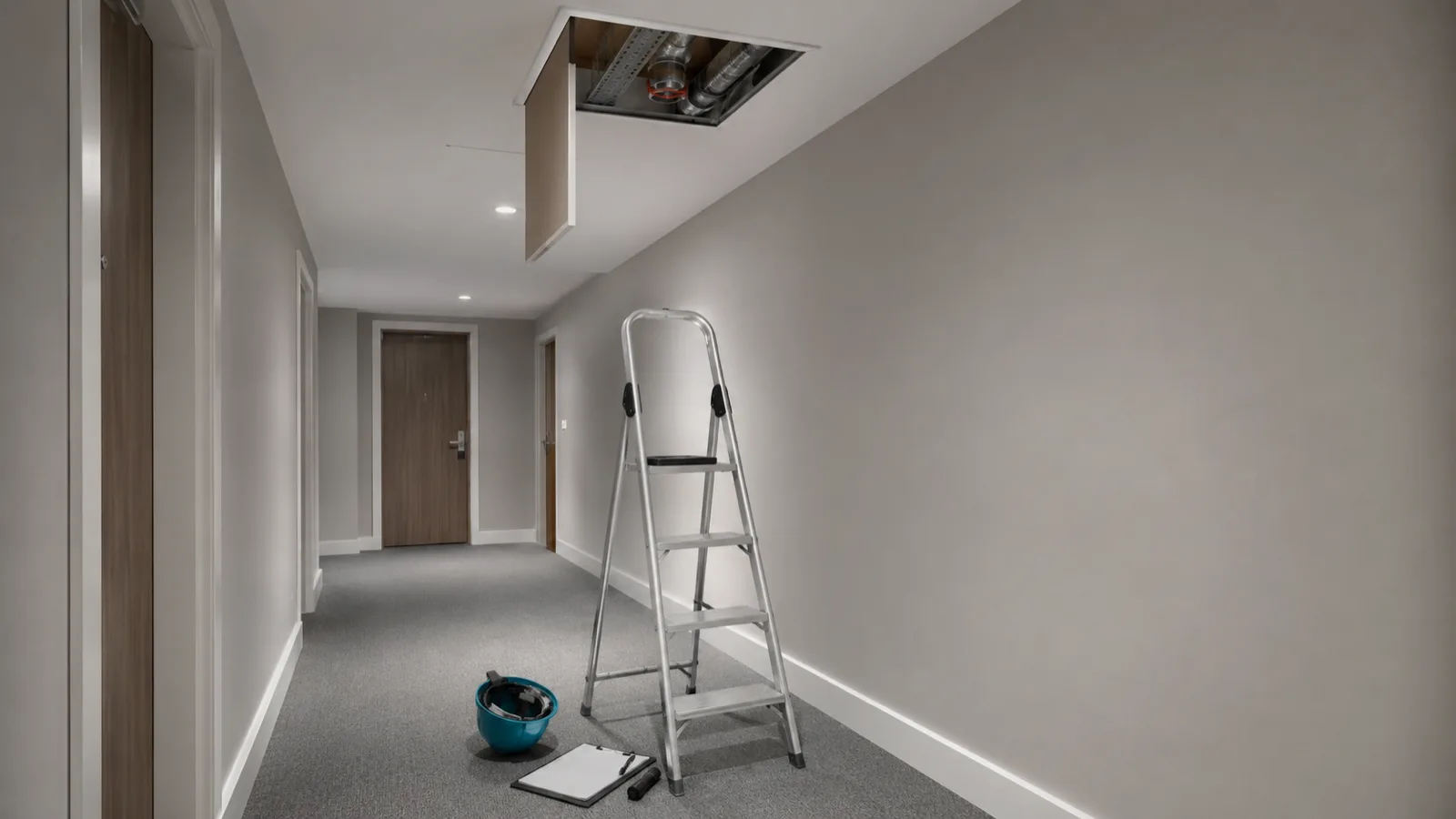
Apartments and duplexes built between 1991 and 2013 with fire safety, structural safety or water ingress defects that breached the Building Regulations of the time are in scope, and only the owners' management company (OMC) can apply (Housing Agency). An interim scheme funds emergency fire safety works now; full remediation waits for a Bill not yet introduced.
Are we eligible, and what do we do while we wait? Every OMC director in a Celtic Tiger-era block has asked some version of that question over the past two years, usually after a fire safety survey landed with a number on the bottom that nobody had budgeted for. The honest answer is that eligibility is broadly settled and the timing is not. That makes preparation the only thing entirely within your control. The Working Group to Examine Defects in Housing estimated that 50 to 80 per cent of apartments and duplexes from that period may be affected, between 62,500 and 100,000 units, at an average of about €25,000 per unit and a total cost to the State of €1.5 billion to €2.5 billion (Oireachtas).
Which buildings and which defects are covered
The schemes are aimed at the period when the volume of construction ran well ahead of the inspection regime. Three families of defect are in scope: fire safety, structural safety and water ingress. The whole building is assessed at once, common areas and individual apartments together.
That framing matters more than it first appears.
A block with a leaking podium deck and no fire stopping in the roof void has one problem for the purposes of a claim, not two. The technical assessment that establishes the extent of the defects is therefore the document the whole process rests on, and it is worth commissioning properly rather than cheaply.
What is not covered is spelled out: defects that arose because the building was not adequately maintained, because the sinking fund did not plan for replacing building and safety systems at the end of their life, or because later building work was badly managed. The line between a defect and neglected upkeep will be argued case by case, and the OMC with a documented maintenance history is on far stronger ground.
Where the two schemes actually stand
The Interim Remediation Scheme opened on 11 December 2023 to fund emergency fire safety measures (enhanced fire detection and alarms and, in extreme cases, fire wardens) while full works are pending. In February 2025 the Housing Agency announced delays because of public procurement issues: the money flows from a State agency to the OMC, so the works fall under procurement rules (Citizens Information).
In February 2026 the Government approved changes that fast-track detection, alarm and resident evacuation works through a simplified process, with up to 50% of the funding paid in advance and alarm funding expected to reach OMCs during 2026 (gov.ie). At least the life-safety pieces no longer wait on the slowest part of the machinery.
For the statutory scheme itself, the Oireachtas housing committee finished pre-legislative scrutiny in January 2026 and recommended that the scheme open for applications before the end of 2026; the Government said then that the Bill was due to be introduced later in the year. By the end of September 2026 it had not appeared on the Oireachtas list of bills.
Treat that as an intention, not a date in your budget.
Practical note: fire safety work that started after 17 January 2023 can still be covered by the main scheme, but only if it meets the conditions and was agreed with the local authority fire service in advance. Check the Housing Agency's current guidance before you commission anything.
What an OMC should be doing before the money arrives
The blocks that will move first are not the worst affected.
They are the ones whose paperwork is ready. Five pieces of work can be done now, and none of them are wasted if the scheme timetable slips again:
- Commission a fire safety assessment from a competent professional, with a written report and costed recommendations
- Assemble the building's documentation: original certificates, drawings, previous surveys, correspondence with the developer
- Establish the OMC's own legal position: annual returns filed, directors properly appointed, membership register accurate
- Brief the members honestly at the AGM, with the survey findings and the funding position as it stands
- Review the block insurance, since insurers price a known, documented defect differently from an unquantified one
That third point catches more OMCs than any other. A company that has fallen behind on its filings, or that cannot show a properly constituted board, is not in a position to sign a multi-million euro contract, and unwinding that takes months you will not have when funding opens. Vecinly keeps the minutes, quotes and survey reports of each block in one shared file, so the paper trail exists before anyone asks for it.
The money in the meantime
Interim funding does not pay for everything, and the gap lands on the service charge. Blocks in this situation typically face higher insurance premiums, the running cost of any interim measures and professional fees that arrive long before any grant does.
This is where a properly funded reserve stops being a compliance box and starts being the thing that keeps the block solvent. If your building is still working from the statutory €200 per unit, the arithmetic in why €200 per unit was never enough applies with more force here than anywhere else, not least because an unplanned sinking fund is one of the listed exclusions.
Be equally clear with owners about what the schemes do not do. They fund remediation of specified defects; they do not compensate for lost value, and they do not remove the OMC's obligation to keep collecting service charges in the meantime.
The governance trap nobody warns you about
The scale of the contracts is the risk that gets least attention. A volunteer board that has spent years approving landscaping quotes is suddenly overseeing a procurement worth several million euros, with public money attached and the compliance obligations that come with it.
The Oireachtas committee itself recommended that the Housing Agency make project managers available to OMCs for precisely this reason. If your block reaches that stage, the professional support is not an indulgence. It is the difference between a remediation that finishes and one that ends in litigation between owners. What else a volunteer board needs for this is on our page for board presidents.
Whatever else you do, keep the board's decisions minuted, the quotes on file and the members informed in writing.
What is the Interim Remediation Scheme?
A State scheme, run by the Housing Agency since December 2023, that funds emergency fire safety works in apartments and duplexes built between 1991 and 2013 until full remediation is done. Only OMCs can apply; funding never goes to individual owners.
Why was the Interim Remediation Scheme delayed?
In February 2025 the Housing Agency announced delays because public money paid to OMCs brings the works under public procurement rules. In February 2026 the Government simplified the process for fire detection and alarm works and offered up to 50% advance funding.
When will the apartment defects remediation scheme open?
It needs legislation first. The Oireachtas housing committee recommended in January 2026 that it open for applications before the end of 2026, and the Government said the Bill would be introduced later that year. By the end of September 2026 it had not been, so no opening date is fixed.
Nobody can tell you the exact month the full scheme opens. What you can control is whether your block is ready when it does: a proper survey, a complete file, a compliant company and members who have heard the numbers from you rather than from the news.
Information updated in September 2026. This article is for information only and does not constitute legal advice.
Keep reading


Try the specialized platform for your community
Organize maintenance, communication and management easily.