Central heating in an Italian condominium: dates, hours and costs
The switch-on calendar is set by national law, the daily hours are voted by the assembly and the bill follows consumption. Knowing who decides what prevents most winter disputes.
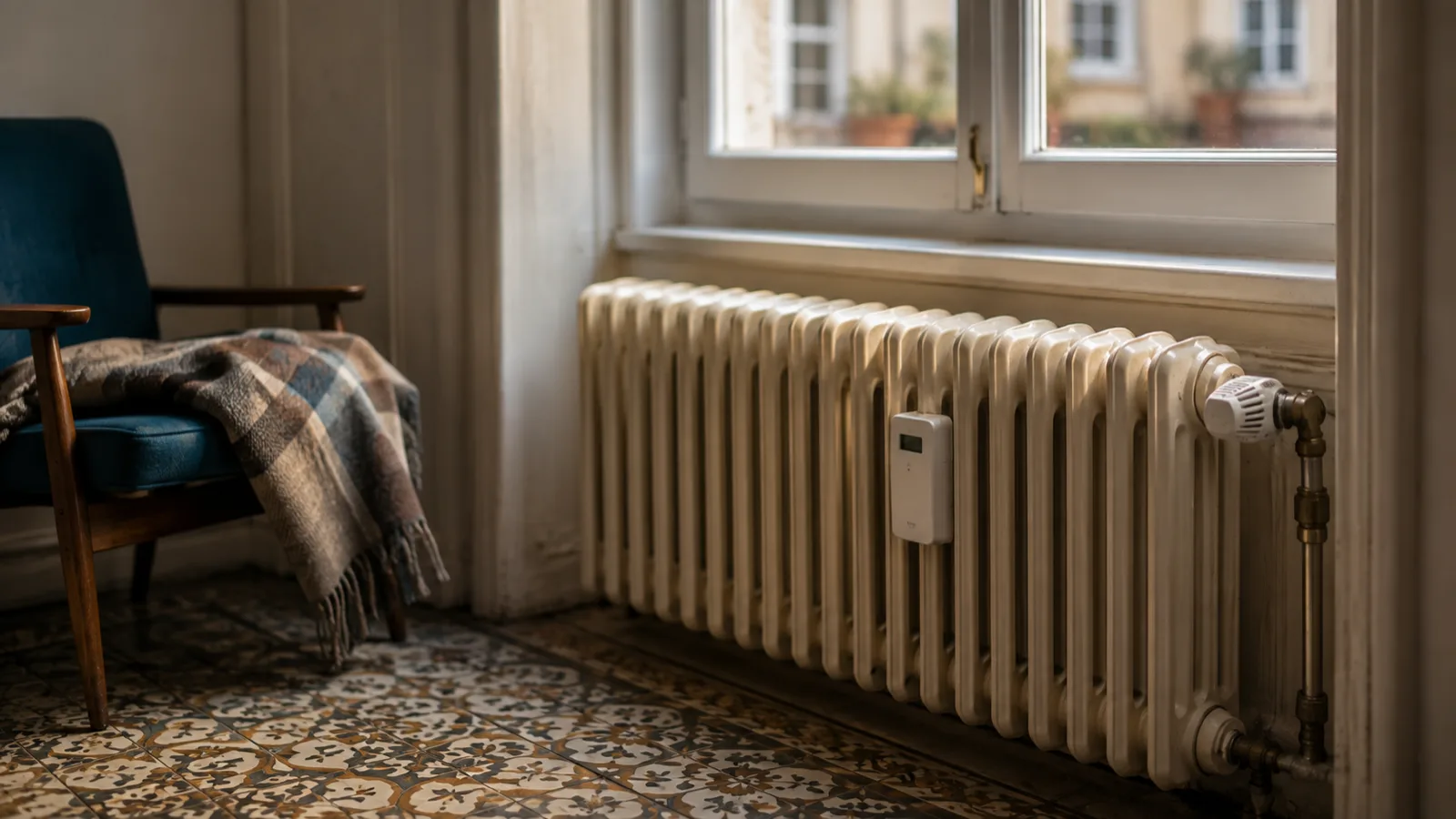
Central heating in an Italian condominium runs on dates set by climate zone in Presidential Decree 74/2013: in zone E, which includes Turin, from 15 October to 15 April for at most 14 hours a day. Within those limits the assembly votes the hours, and at least 50 % of the bill follows metered consumption.
In early October the assembly of a Turin condominium unanimously decides to fire up the radiators "from Monday": it is cold, the system has been off since April and nobody wants to wait. The administrator points out that Turin is in zone E: before 15 October the system may only run if the weather justifies it, and for half the normal hours, seven. The motion passes, cut down to seven hours, and the grumbling lasts until mid-month. The heating calendar is not the building's to set, and the assembly can only move within the legal limits. The real room for manoeuvre lies elsewhere: in the daily hours, in the cost-sharing method and in the article of the civil code that governs owners who want to disconnect.
When central heating may be switched on
Italy is split into six climate zones, from A (warmest) to F, calculated on each municipality's degree days. Each zone comes with an operating period and a daily cap:
- Zone A: 1 December to 15 March, 6 hours a day
- Zone B: 1 December to 31 March, 8 hours a day
- Zone C: 15 November to 31 March, 10 hours a day
- Zone D: 1 November to 15 April, 12 hours a day
- Zone E: 15 October to 15 April, 14 hours a day
- Zone F: no limit on period or hours
Outside those periods a system may only run when the weather justifies it, for no more than half the permitted hours. The hours can be split into two or more slots, but all of them must fall between 5 a.m. and 11 p.m. Average indoor air temperature must not exceed 20 °C, with two degrees of tolerance (Article 3). That last figure is the parameter assemblies forget most often when somebody asks for "a bit more heat in the evening".
One exception outranks the rule: the mayor can extend or shorten the period and the hours by ordinance where there is a proven need (Article 5), and an unseasonal cold snap is the usual trigger. Before answering the owner who complains, check whether the municipality has issued one. It changes the answer and ends the argument in three lines.
Who sets the hours inside the building
Within the legal limits, running the system is the assembly's business, not the administrator's.
The assembly sets the daily slots, the actual start date and the shutdown date, using the ordinary majorities for the use of common property, summarised in assembly majorities in Italy; the administrator carries out the decision and is answerable if he goes beyond the legal cap.
The building's regulations may fix stable time slots, in which case the assembly simply applies them without re-voting every autumn. When the regulations are silent (the usual situation), the slots are approved season by season, and the minutes are the only document protecting the administrator from anyone who claims to have understood something different.
No minutes, and whoever shouts loudest wins.
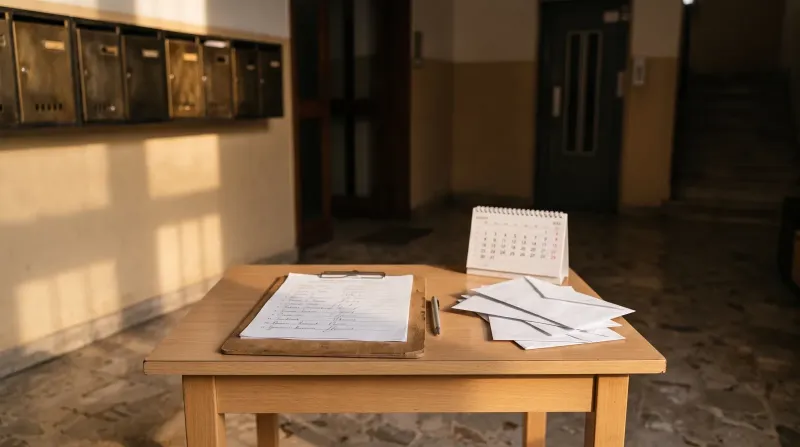
Practical note: put the switch-on on the agenda of the September assembly instead of handling it by phone in November. A written resolution with slots, start date and reference temperature stops every cold snap from turning into a chain of messages to the administrator.
How costs are split once heat metering is in place
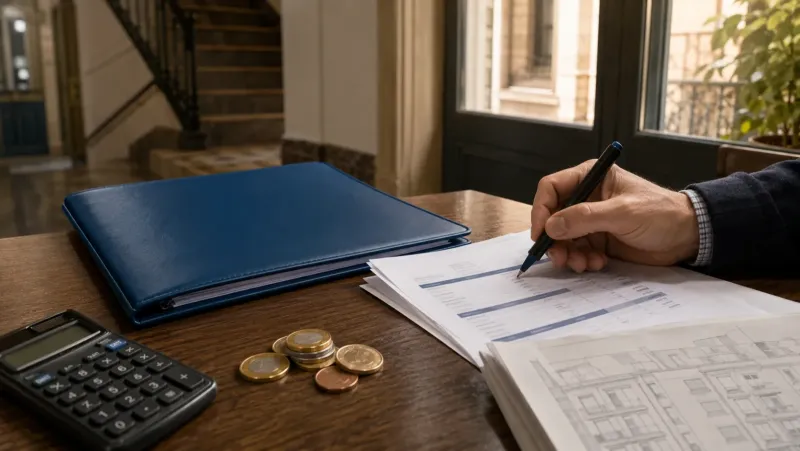
Condominiums with a central system must have heat metering devices (meters or allocators on the radiators) and the bill is no longer divided by millesimi alone. The rule in force requires at least 50 % of the energy consumption expense to be allocated to voluntary consumption (Article 9(5) of Legislative Decree 102/2014), meaning what each flat actually drew; the remainder is shared using an objective parameter such as millesimi, square metres or installed power. That non-voluntary share is not an arbitrary levy: it covers involuntary consumption, the heat radiating from risers and party walls that warms even the flat with every valve shut. It is why an apartment left empty all winter still gets a bill, and explaining it beforehand prevents the annual accounts being challenged afterwards.
Only in the first season after the allocators go in may the whole bill still be split by millesimi. An owner who fails to install them faces a fine of 500 to 2,500 euros per unit, unless a technical report shows installation is impossible or not cost-effective (Article 16). And there is a deadline few administrators have diarised: by 1 January 2027 metering devices must be readable remotely (Article 9, paragraph 5-bis), where technically feasible and cost-effective. If your allocators went in ten years ago, check with the maintenance company this winter rather than in December 2026, when quotes stretch and technicians vanish.
Can a flat disconnect from the central system?
Yes, but not unilaterally with a wrench. Article 1118, paragraph 4 of the civil code (text) allows an individual owner to give up the use of the central system only if the disconnection causes no significant operating imbalance and no extra cost for the other owners.
In practice the owner who disconnects proves it with a technical report showing, in numbers, that the system keeps working as before. Without that report the disconnection can be challenged in the assembly and in court, and the owner risks having to reconnect at their own expense.
Even a lawful disconnection leaves extraordinary maintenance and the costs of preserving and upgrading the installation to be paid: the boiler remains common property. What disappears is the consumption charge. That line between running costs and preservation costs is the same logic that governs how condominium expenses are shared.
Vecinly lets the building call the September assembly with the switch-on on the agenda and keep the voted slots in minutes every owner can read, in their own language; the page on international communities covers owners who live abroad.
If you only do one thing in September, put the switch-on on the agenda and have the allocators checked. The slots and the start date get voted and minuted; anyone who wants to disconnect brings their own survey. After that, the rest of the season is routine.
Information updated September 2026. This article is for information only and does not constitute legal advice.
Available in 2 languages
Keep reading
Try the specialized platform for your community
Organize maintenance, communication and management easily.