Private or common property in a German WEG: who pays for what?
The window in your flat is not yours, and the bill can still land on your desk. Classification decides the ownership, the community rules decide the cost.
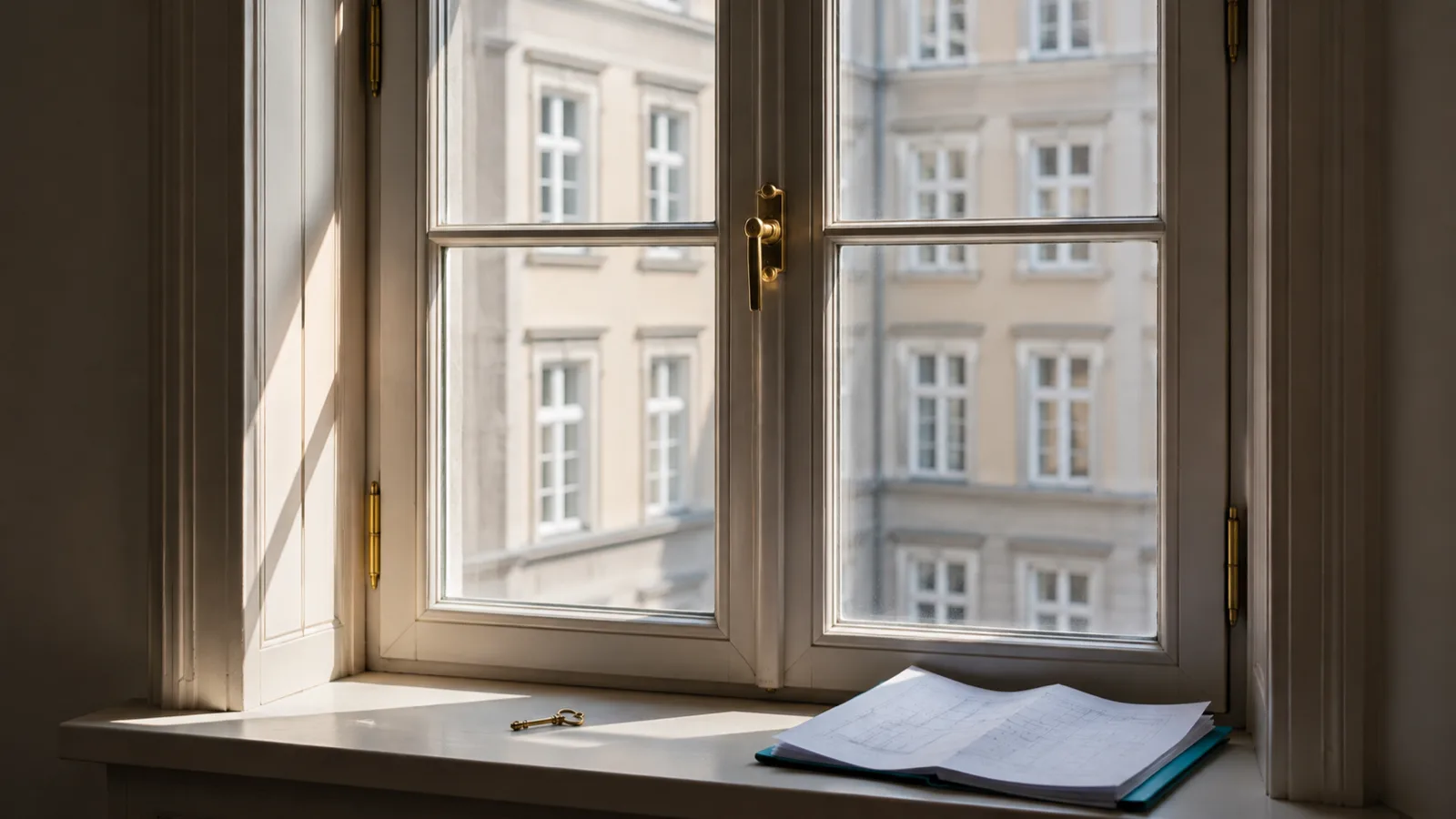
In a German owners' association (WEG), the association pays for common property, split by co-ownership share, and each owner pays for their own private property (section 16(2) WEG). Windows, the flat's front door and anything needed for the building's structure or safety are always common property. The community rules can still make the flat's owner pay for them.
So the window in your living room is not yours, even though you bought the flat partly because it faces south. That surprises many foreign buyers, and it explains why one neighbour pays for her broken pane while another does not.
What the association always owns
Under section 5(2) WEG, parts of the building needed for its structure or safety, and installations used in common, can never be private property, even when they sit inside a flat. Section 5(1) adds that private property can only be what can be changed without altering the building's external appearance. No declaration of division can override this. In practice the association owns the windows and their frames (Federal Court of Justice, V ZR 174/11, 2 March 2012), the flat's entrance door even where the rules say otherwise (V ZR 212/12, 25 October 2013), load-bearing walls, the roof, the risers, and a balcony's structure, waterproofing and railing. Non-structural inner walls, floor coverings, inner doors and bathroom fittings usually belong to the flat owner. Radiators and the pipes inside a flat are the grey zone: the answer depends on the declaration of division and on how the heating system is built, so check both before anyone votes on who pays.
When the community rules move the bill
Ownership and cost are separate questions. Many community rules (Gemeinschaftsordnung) say each owner pays for the maintenance of common parts within their flat, usually the windows. The window stays common property; the invoice goes to you. The Federal Court of Justice has held that such a clause also covers defects present from construction, unless it says otherwise (V ZR 36/24, 23 May 2025). Read the wording carefully: in 2012 the same court found that a clause excluding exterior painting did not cover the full replacement of a window.
Since December 2020 the owners can also change the split for particular costs by a simple majority vote (section 16(2), second sentence), even releasing some owners entirely or charging others for the first time, provided the key does not treat anyone unfairly (V ZR 81/23, 22 March 2024). Charging balcony repairs to the flats that have balconies is the textbook case.
If you let the flat, maintenance is not an operating cost you can pass on to the tenant (section 1(2) BetrKV).
Are windows private or common property in Germany?
Windows and frames are always common property under section 5(2) WEG. The community rules may still require the flat's owner to pay for their maintenance.
Who pays for balcony repairs in a German WEG?
The balcony's structure, waterproofing and railing are common property, so the association pays by default. The community rules or a majority resolution can charge those costs to the owners of the flats with balconies.
Before the next renovation vote, read the declaration of division and the community rules side by side and write down who pays for windows, doors, balconies and pipes. For how those costs reach your monthly bill, see Hausgeld in Germany; for associations that run themselves, see a German WEG without a property manager. Vecinly keeps that one-page summary with the association's documents, in each owner's language, which is why associations with owners abroad use it; see our page on international owners' associations.
Information current as of September 2026. This article is for information only and does not constitute legal advice.
Available in 2 languages
Keep reading
Try the specialized platform for your community
Organize maintenance, communication and management easily.