Collective energy survey: what a small French copropriété must do
Since 2026 the obligation covers every residential copropriété, including the six-lot building run by a volunteer. The timetable, the vote and the real cost.
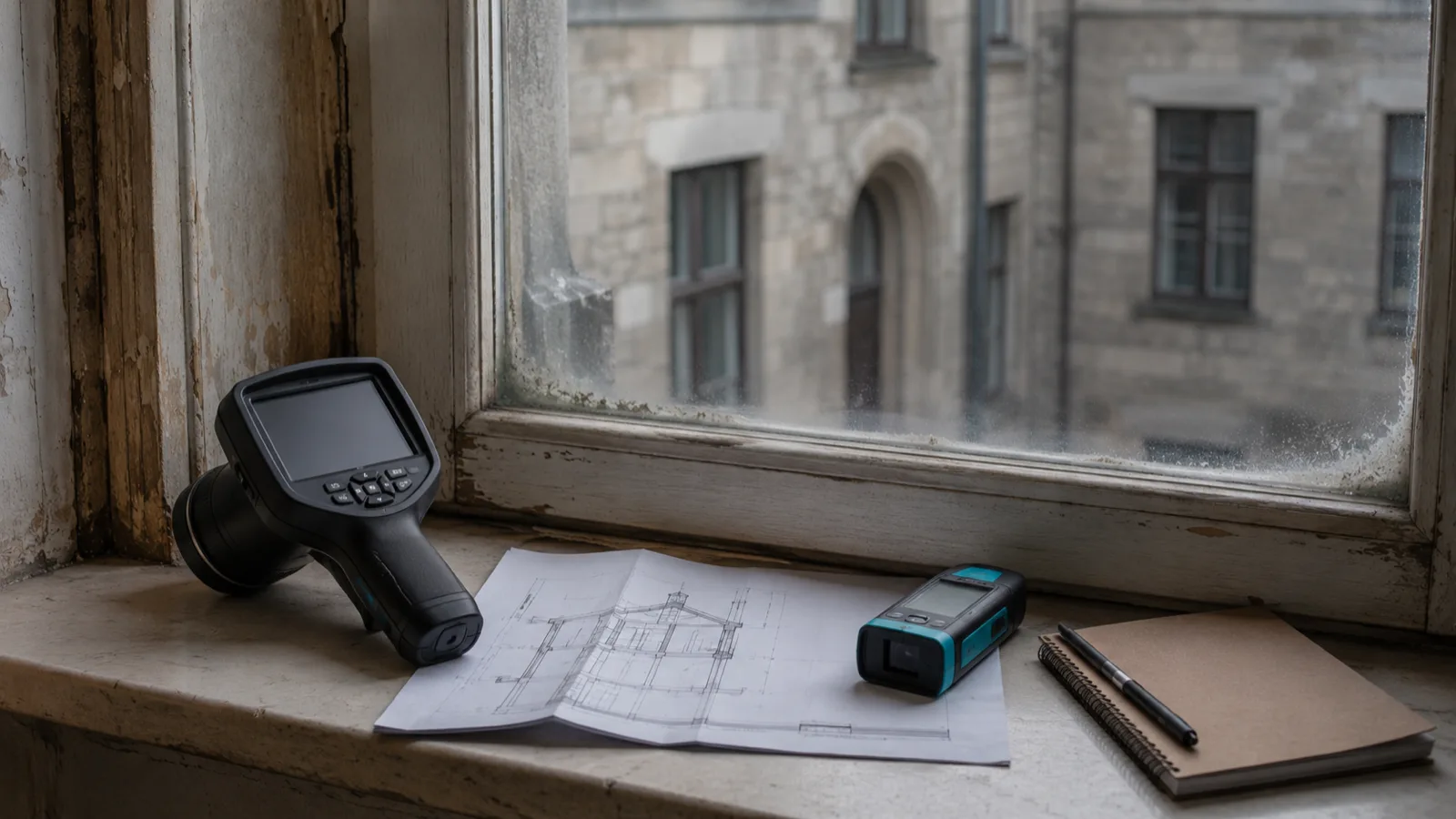
Since 1 January 2026, every residential French copropriété whose building permit was filed before 1 January 2013 must hold a collective energy performance survey, the DPE collectif, including buildings of fewer than 50 lots (service-public.gouv.fr). It is voted by the simple majority of article 24, lasts ten years and costs €1,000 to €5,000 according to Ademe.
An eight-lot copropriété in a 1970s building holds its spring general meeting without a care. The volunteer syndic presents the accounts, the hallway repainting is approved, everyone goes home. Three months later, the engineering firm hired to draft the multi-year works plan asks for the building's collective survey, which nobody had heard of. Large blocks were caught in 2024 and buildings of 50 to 200 lots in 2025 (ecologie.gouv.fr); small copropriétés, the ones with neither a professional syndic nor a well-staffed council, bring up the rear.
Who is covered, and who is not
The obligation attaches to the building, not to the number of owners. If the block is used for collective housing and its building permit was filed before 1 January 2013, the collective survey applies whether there are eight lots or two hundred. Two situations fall outside: buildings permitted after that date, and a copropriété that already holds a collective survey still within its validity period. The overseas departments follow later, on 1 January 2028.
Do not confuse this document with the individual DPE you had drawn up to sell or let your own flat. The collective survey covers the whole building (envelope, roof, communal heating and ventilation) and provides the technical basis for the works voted at the general meeting.
What it contains and how long it lasts
The survey describes the building's energy condition, estimates its consumption and emissions, gives it an energy label and a climate label from A to G, checks ventilation and, above all, recommends works with an estimate of their cost. That last part is what matters to the copropriété: it turns a shared hunch ("the place is a sieve") into a costed list. It is valid for ten years, and a survey carried out after 1 July 2021 that rates the building A, B or C does not need renewing.
Note: the collective survey does not automatically replace the DPE needed to sell or let a flat. The surveyor can, however, derive every flat's DPE from the building survey without visiting each one, provided windows, ventilation and heating are similar (ecologie.gouv.fr). An owner who has renovated their flat can still commission their own.
The vote at the general meeting and the real cost
The syndic puts the survey and the choice of surveyor on the agenda, and both are voted by the simple majority of article 24 of the law of 10 July 1965: a majority of the votes cast by owners present, represented or voting by post. It is the most accessible majority in French co-ownership law, and getting the item onto the agenda is the only real difficulty.
The budget is less reassuring than people expect.
Ademe, quoted by service-public, puts a collective survey at €1,000 to €5,000 depending on the building's size, location, construction and heating system. Prices are not regulated, and no grant pays for this compulsory survey. The cost is shared between owners according to their tantièmes, like any other common charge. Get quotes from two or three certified surveyors and ask to see a report they have already delivered: the quality of the recommendations varies far more than the price, and a rushed report produces an unusable works plan, which means the money was spent on a document that will sit in a drawer while the building keeps leaking heat exactly as before.
What happens if the copropriété does not have one
The law sets no penalty for a copropriété that has not commissioned its survey, as long as the question was put on a general meeting agenda. That explains why so many buildings let it slide.
It is a short-sighted reading, because the real consequences lie elsewhere.
Without the collective survey, the copropriété is working blind on three fronts at once:
- Drawing up the multi-year works plan, whose draft rests on an analysis of the building and on the DPE (service-public.gouv.fr)
- The follow-up debate: once the survey is presented, the syndic must ask the meeting about an energy-saving works plan or an energy performance contract
- The association's liability towards an owner who can no longer sell or let because of a poor rating caused by the common parts
From survey to works to funding
The collective survey opens a sequence.
The survey establishes the state of play, the multi-year plan schedules and costs the work over ten years, and the works fund built up each year pays for what has been scheduled. For a building run by a volunteer syndic, the sensible move is to handle all three in the same meeting: vote the survey, plan to put the works schedule on the next agenda, and adjust the contribution to the fund accordingly. The report is then attached to the building's maintenance log; in community management software such as Vecinly it sits with the other building documents that every owner can open.
Is the DPE collectif compulsory?
Yes, for every collective residential building whose permit was filed before 1 January 2013. It has applied since 2024 to copropriétés of more than 200 lots, since 2025 to those of 50 to 200 lots and since 1 January 2026 to all the others.
How much does a DPE collectif cost?
Between €1,000 and €5,000 according to Ademe, depending on the building's size, location, construction and heating. Prices are free and no grant covers the survey.
What is the difference between a collective and an individual DPE?
The collective survey assesses the whole building and feeds the works plan for the common parts. The individual DPE covers one flat for a sale or a letting, and can be derived from the building survey when the flats share similar equipment.
Put the survey on the agenda of the next general meeting, with two or three quotes attached to the notice. Then read the recommendations before filing them: they are the raw material of the works plan.
Information current as of September 2026. This article is for information only and does not constitute legal advice.
Available in 2 languages
Keep reading
Try the specialized platform for your community
Organize maintenance, communication and management easily.