The mandatory works fund in French co-ownership (ALUR law)
Since 2025 even small French co-ownerships must feed a works fund. Who is covered, how much to pay in each year, where the money sits and why it never comes back when you sell.
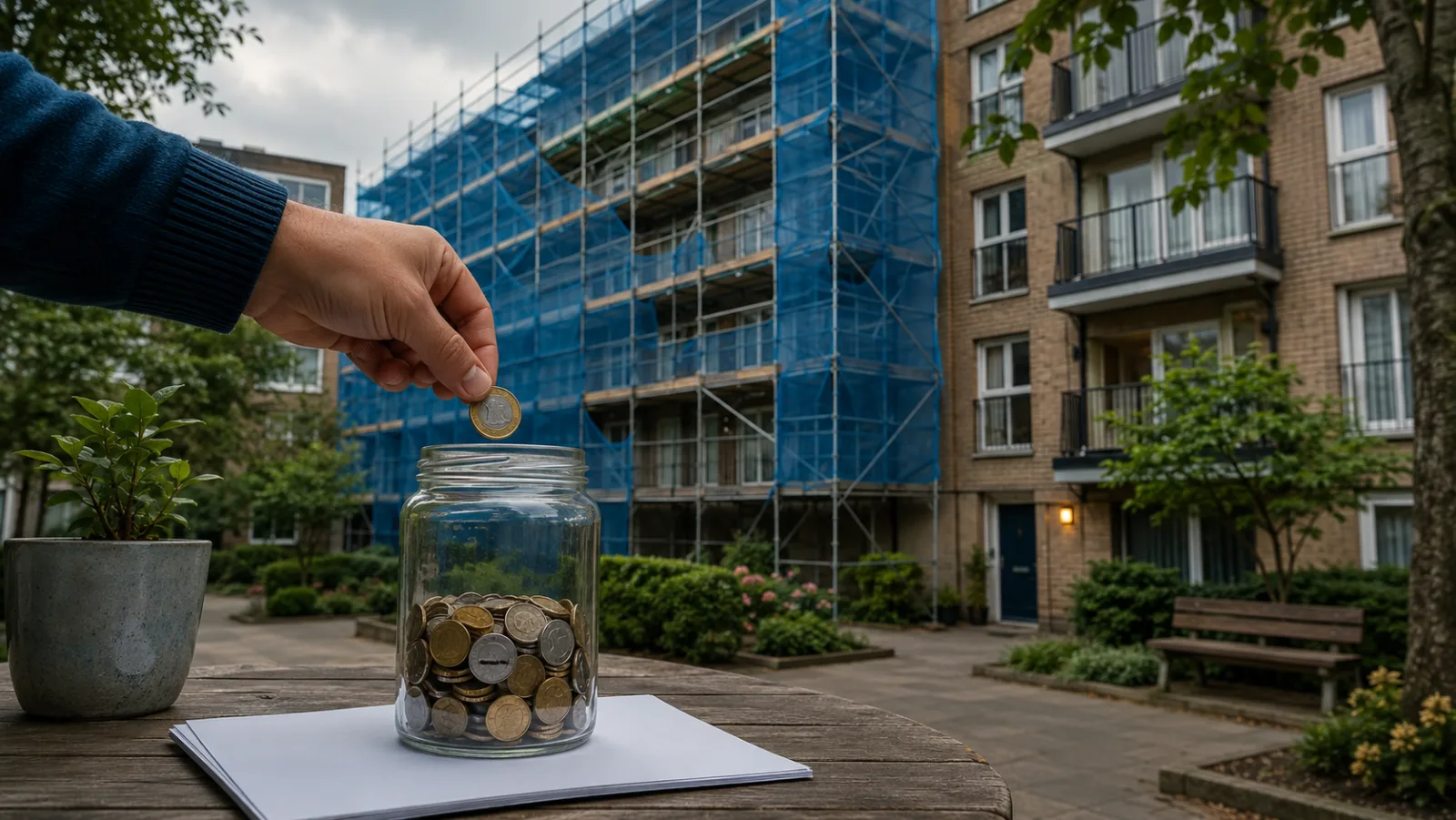
Every French copropriété used wholly or partly as housing must pay into a works fund once ten years have passed since the building was completed, whatever its number of lots. The yearly contribution cannot fall below 5% of the provisional budget, nor, once a multi-year works plan is adopted, below 2.5% of the planned works (service-public.gouv.fr).
The rollout started at the top: co-ownerships with more than 200 lots in 2023, mid-sized buildings in 2024, and since 1 January 2025 the small ones too, down to the last six-flat building. What remains to be understood is where the money sits, who decides how to spend it, and what happens to it when you sell.
Is the works fund mandatory in your building?
The mechanism, introduced by the ALUR law of 24 March 2014 and reshaped by the Climat et Résilience law of 22 August 2021, now sits in article 14-2-1 of the law of 10 July 1965: the backbone of French co-ownership law. It applies to buildings used wholly or partly as housing, once ten years have passed since completion of construction. A new building is therefore exempt during its first decade; after that, the obligation kicks in.
The current regime came into force in stages, based on the number of lots, counting homes, offices and shops together (ANIL):
- 1 January 2023 for syndicates with more than 200 lots
- 1 January 2024 for those with 51 to 200 lots
- 1 January 2025 for those with 50 lots or fewer
That last step is the one that changed the landscape.
Under the previous rules, co-ownerships with fewer than ten lots could still opt out by a unanimous vote; that exit door is gone, and small buildings are discovering a new line on their payment calls.
Legal note: a global technical survey (diagnostic technique global) showing no works needed over the next ten years exempts the co-ownership from drawing up a multi-year works plan (service-public.gouv.fr). It does not exempt it from the works fund, which applies to every residential building more than ten years old.
How much do you have to pay in each year?
The floor depends on whether a multi-year works plan has been adopted. Without one, the annual contribution cannot be lower than 5% of the provisional budget. Once the general meeting has adopted a plan, the floor doubles up: at least 2.5% of the cost of the works listed in the plan, and never below 5% of the budget. In other words, an ambitious plan mechanically pushes the contribution upwards, by design, since the fund is meant to match the announced works.
The meeting can vote a higher amount, at the majority of the votes of all co-owners. It is often a sensible move: in a twelve-lot building with a €30,000 routine budget, 5% comes to €1,500 a year, or €125 per lot on average, nowhere near the cost of a roof or a facade renovation. Better to pay in small, regular instalments than to face a massive one-off call the day the facade can no longer wait.
The law also provides the reverse valve: the meeting votes on suspending contributions once the fund exceeds the provisional budget and, where a plan has been adopted, once it also exceeds half the cost of the works it contains (ANIL).
Where does the money sit and who decides how to use it?
Contributions are deposited in a separate, interest-bearing bank account opened in the name of the syndicate of co-owners, distinct from the day-to-day management account. The interest earned belongs definitively to the syndicate. This second account is opened in the same bank as the association's main separate account (Anah volunteer syndic guide), and opening it is part of the syndic's flat fee, so it cannot be billed on top.
The syndic holds the account but does not decide: it is the general meeting that votes on how the fund is used, at the same majority as the one applicable to the expenditure in question, as set out in our guide to general meeting majorities. The fund can pay for, among other things:
- Drawing up the multi-year works plan and carrying out the global technical survey
- Works listed in the adopted plan or voted by the general meeting
- Urgent works needed to safeguard the building, decided by the syndic
- Works for the building's preservation, the occupants' health and safety, or energy savings
The fund does not pay for routine upkeep, which stays in the provisional budget. For works, a well-stocked fund changes the nature of general meetings: owners no longer vote on whether they can afford the works, but on which contractor and which schedule. One of the first items it often pays for is the collective energy survey on which the works plan rests.
Do you get your money back when you sell your lot?
No, and this is the point that surprises sellers most. The sums paid in are attached to the lot, not to the person: they enter the syndicate's assets definitively upon payment and are not refunded on a sale. The buyer inherits a lot backed by a reserve that has already been built up. Seller and buyer can, however, agree in the deed of sale that the buyer reimburses the share not yet spent on works, on top of the price. The amount attached to the lot appears in the documents handed over before the sale. A practitioner's reflex: ask for that figure at the offer stage, not at the notary's: it is a pricing argument, not a formality.
In Vecinly, a one-off expense can be paid from the building's reserve fund rather than from everyone's service charges. Owners who manage a French flat from abroad will find how notices, accounts and minutes reach them in their own language on our page for international communities.
Is the works fund compulsory in a building with fewer than ten lots?
Yes. Since 1 January 2025 it applies to every residential copropriété more than ten years old, whatever its size. The old option for buildings under ten lots to opt out by a unanimous vote has gone.
What is the minimum works fund contribution?
5% of the provisional budget each year. Where the meeting has adopted a multi-year works plan, the contribution must also reach at least 2.5% of the cost of the planned works.
Do you get the works fund back when you sell?
No, the money stays with the syndicate. The deed of sale can, however, provide for the buyer to reimburse the seller's share not yet spent on works, on top of the price.
How other European countries set the legal minimum is compared in reserve funds across Europe, country by country.
Pull out the last set of minutes and check two figures: the contribution rate voted and the balance of the fund's account. If the rate is below 5% of the budget, put the correction on the next agenda.
Information current as of September 2026. This article is for information purposes and does not constitute legal advice.
Available in 2 languages
Keep reading
Try the specialized platform for your community
Organize maintenance, communication and management easily.