Pla Renova: how an Andorran owners' community applies for the grants
The grant only lands once the work is finished and paid for, and the 2026 call closed after three weeks. The calendar, more than the percentage, decides whether a building gets it.
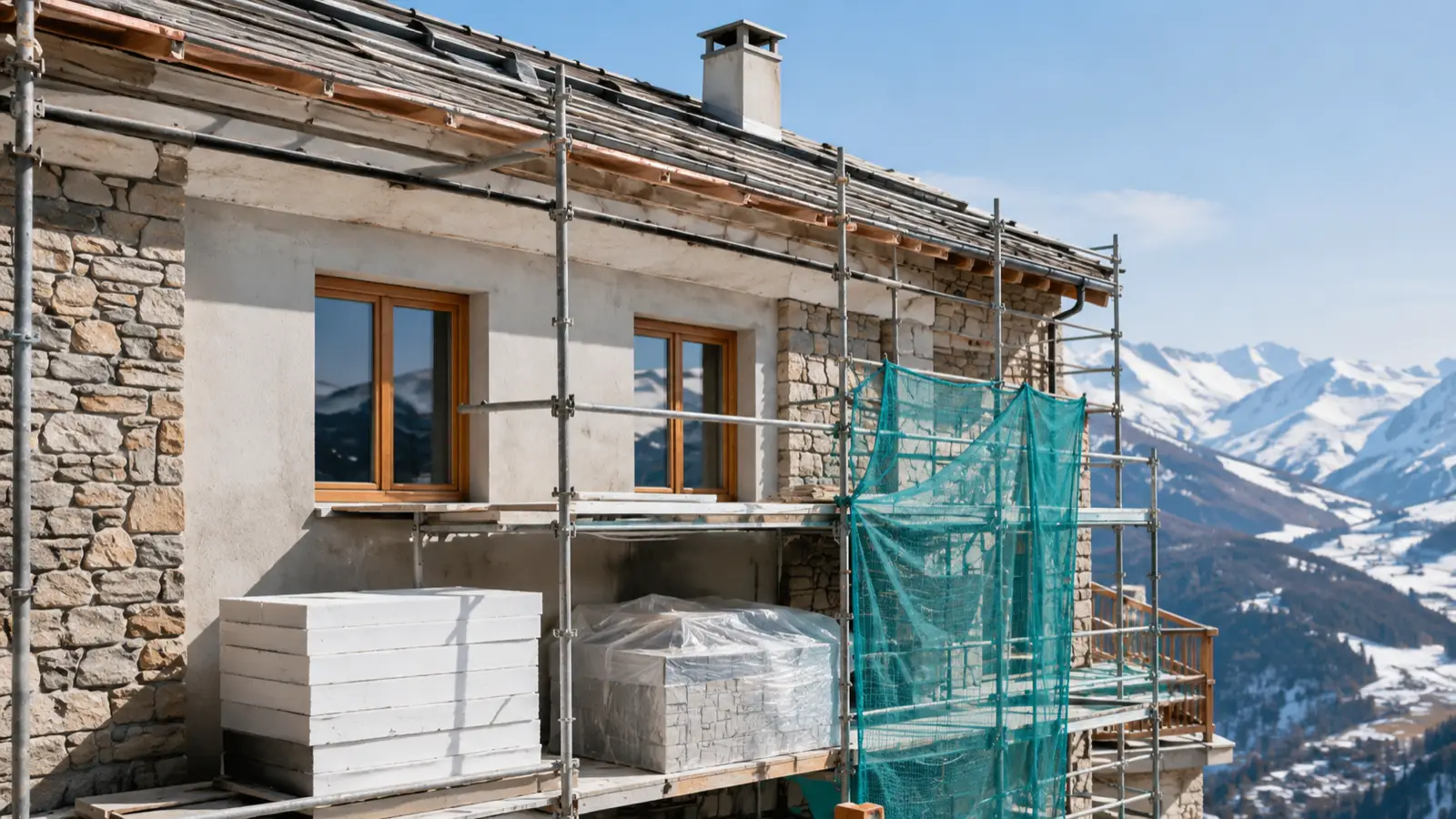
An Andorran owners' community can apply for Pla Renova with its deed of horizontal division and an administrator's certificate listing every owner. The grant is capped at 60% of the cost and paid only once the work is finished and paid for; meanwhile the Government guarantees loans for up to 100% of eligible costs (Decree 100/2025, art. 8).
If you own a flat in Andorra from abroad, this is the programme your building will most likely vote on for windows, insulation or a lift.
Here is what to check before you raise your hand.
What it pays for, and the catch for communities
The legal basis is Law 16/2022, with Decree 100/2025 as the regulation. Individuals, companies and owners' communities can all apply (art. 9). When the community applies, though, the grant only covers the share of units, by ownership coefficient, that meet every requirement. The building also needs a first occupancy licence more than fifteen years old for most types of work (art. 5.4.a).
Each annual call sets the rates. The 2026 call of 18 March gives these figures for apartment buildings:
| Work | Grant | Cap per building | Loan |
|---|---|---|---|
| Full insulation upgrade to energy rating A | 40% | €50,000 | 100% |
| Walls or roof and windows together | 35% | €30,000 | 100% |
| Walls or roof only | 25% | €20,000 | 100% |
| Windows and French windows only | 20% | €20,000 | 100% |
| Accessibility and removing barriers | 15% | No cap in the table | 100% |
Flats brought back to the long-term rental market as a main home can earn up to 15 extra percentage points (art. 8.3), and the call caps the direct grant at €50,000 for all works combined, before bonuses.
Timing and money
Works must not have been completed before the call opens, dated by payment of the last invoice (art. 5.4.b). Once the grant is awarded they must be finished within thirty months (art. 5.5). The grant is paid within two months of the energy office certifying the work (art. 13).
The community therefore fronts the whole cost. The preferential loan covers up to 100% of eligible costs at one-year Euribor plus 1.50%, with no fees, over up to fifteen years with an optional year's grace, and is fully guaranteed by the Government (art. 8.5). Above €15,000 a mortgage in the Government's favour must be granted by public deed, at the borrower's cost (art. 8.6). The loan must be signed within six months of the award (art. 8.4), payments run through a dedicated bank account (art. 8.7), and the grant, when it arrives, goes towards repaying it (art. 8.9).
The call lasts weeks
The 2026 call was published in the official gazette on 25 March with €1.5 million for grants and €11.19 million for loans. On 15 April the Government closed it provisionally: in three weeks, 202 applications had asked for €1,673,458.20, more than was available. Applications left out can only roll over to a 2027 call if their paperwork was complete before final closure. So the real work happens in autumn and winter: quotes, a properly convened owners' meeting that approves the works, funding and signing authority, and an up-to-date list of owners for the administrator's certificate (art. 11).
Can an owners' community apply for Pla Renova?
Yes. It submits the deed of horizontal division and an administrator's certificate identifying each owner, and the grant is calculated on the share of units that meet the requirements.
How much does Pla Renova pay?
In 2026, between 15% and 40% for apartment buildings depending on the work, with caps of up to €50,000. The grant can never exceed 60% of the cost; the preferential loan can cover 100%.
When did the 2026 call open and close?
It opened on 26 March 2026 and was provisionally closed on 15 April because applications exceeded the budget.
If you are an owner abroad and the building is discussing a renovation, ask the administrator now whether the file will be ready before next March. If the reserve fund will pay part of it, see how that fund must be funded in our guide to reserve funds and notifications. With Vecinly, the minutes with the signing authority, the invoices and the owner list sit in the same community folder; our page for board presidents explains how.
Information updated September 2026. This article is for informational purposes only and does not constitute legal advice.
Available in 4 languages
Keep reading



Try the specialized platform for your community
Organize maintenance, communication and management easily.