Self-managing your ejerforening: can you skip the administrator?
For many small Danish owners' associations the administrator's fee is the biggest fixed cost after insurance. An honest test of whether your board can run the accounts, dues and meeting itself.
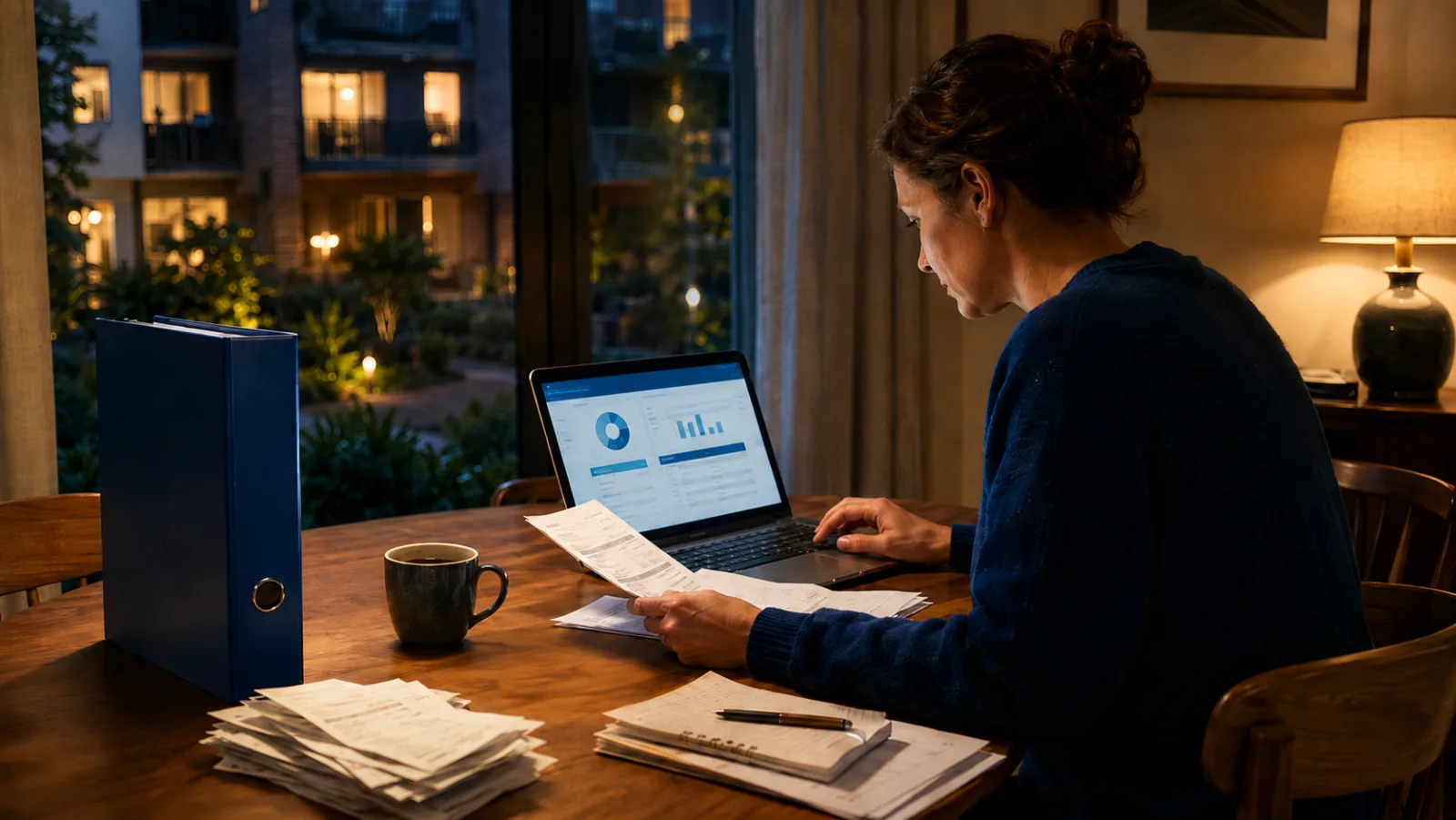
A Danish owners' association (ejerforening) is not required to have an administrator. The general meeting may decide to hire one (section 18 of the standard bylaws); without one, the board appoints a treasurer (section 16(3)) and runs the budget, accounts, collection of common charges and the annual general meeting itself.
For foreign owners in a small Danish building, the question usually comes up when the administrator's invoice is compared with the rest of the budget. Whether you can drop it depends less on skill than on the number of flats, how complex the finances are and whether the board stays in place.
Comparing administrator fees
There is no official price list, and fees vary widely. Most administrators charge a base fee for bookkeeping, collection and annual accounts, plus an amount per flat, and bill extras such as building projects, arrears collection and extraordinary meetings by the hour. Ask every bidder to split their quote the same way and convert it to a price per flat per month. For example, 45,000 kroner a year for 20 flats is 2,250 kroner per flat a year, just under 190 kroner a month; a 60,000-kroner quote works out at 250. Sixty kroner sounds small on a monthly bill and is 15,000 kroner a year for the association. The administrator may not be an owner in the association or its auditor (section 18(2)).
Can your association manage itself?
There is no legal threshold. Our rule of thumb is that around 20 flats the work starts to outgrow a volunteer board, and commercial units, a lift loan or a shared heating account lower that point. Check three things: size, whether someone on the board can read accounts and reconcile a bank account, and whether the same people will still be on the board next year.
What self-management involves
The board must ensure the proper handling of the association's affairs, including budget and accounts, checking that common charges are paid, insurance and a maintenance plan (section 16). The annual accounts need an income statement and a balance sheet (section 21) and are audited by an auditor elected by the general meeting; if a quarter of the owners ask, it must be an approved auditor (section 20). Common charges are collected according to each flat's allocation share (section 7 of the Owner-Occupied Flats Act). Each year the annual general meeting is called with 4-8 weeks' notice and approves the maintenance plan.
Keep the association's account apart from the treasurer's own money. The association is bound only by two signatures (section 19), so set up online banking the same way: two people approve every payment.
Board liability
Board members can be personally liable for losses they cause the association through negligence, and without an administrator nobody else catches the mistake. Under the standard bylaws, board liability insurance is taken out unless the general meeting decides otherwise (section 16(4)); see board liability in a Danish ejerforening.
Does a Danish ejerforening need an administrator?
No. The general meeting can decide to hire one, but there is no obligation. Without an administrator, the board appoints a treasurer.
How should we compare administrator quotes?
Ask each bidder to separate the base fee, the per-flat charge and the hourly extras, then convert each quote to a price per flat per month.
Work out your own numbers and be honest about the board's time before you give notice to anyone. Vecinly keeps collection, receipts, minutes and the maintenance plan in one place and in each owner's language; see our page on international owners' associations.
Updated September 2026. This article is for information only and does not constitute legal advice.
Available in 2 languages
Keep reading


Try the specialized platform for your community
Organize maintenance, communication and management easily.