Austrian condominium annual statement: the 30 June deadline
Six months after year-end, time is up: if the annual accounts are missing, any single owner can go to court, and the manager faces penalties of up to 6,000 euros.
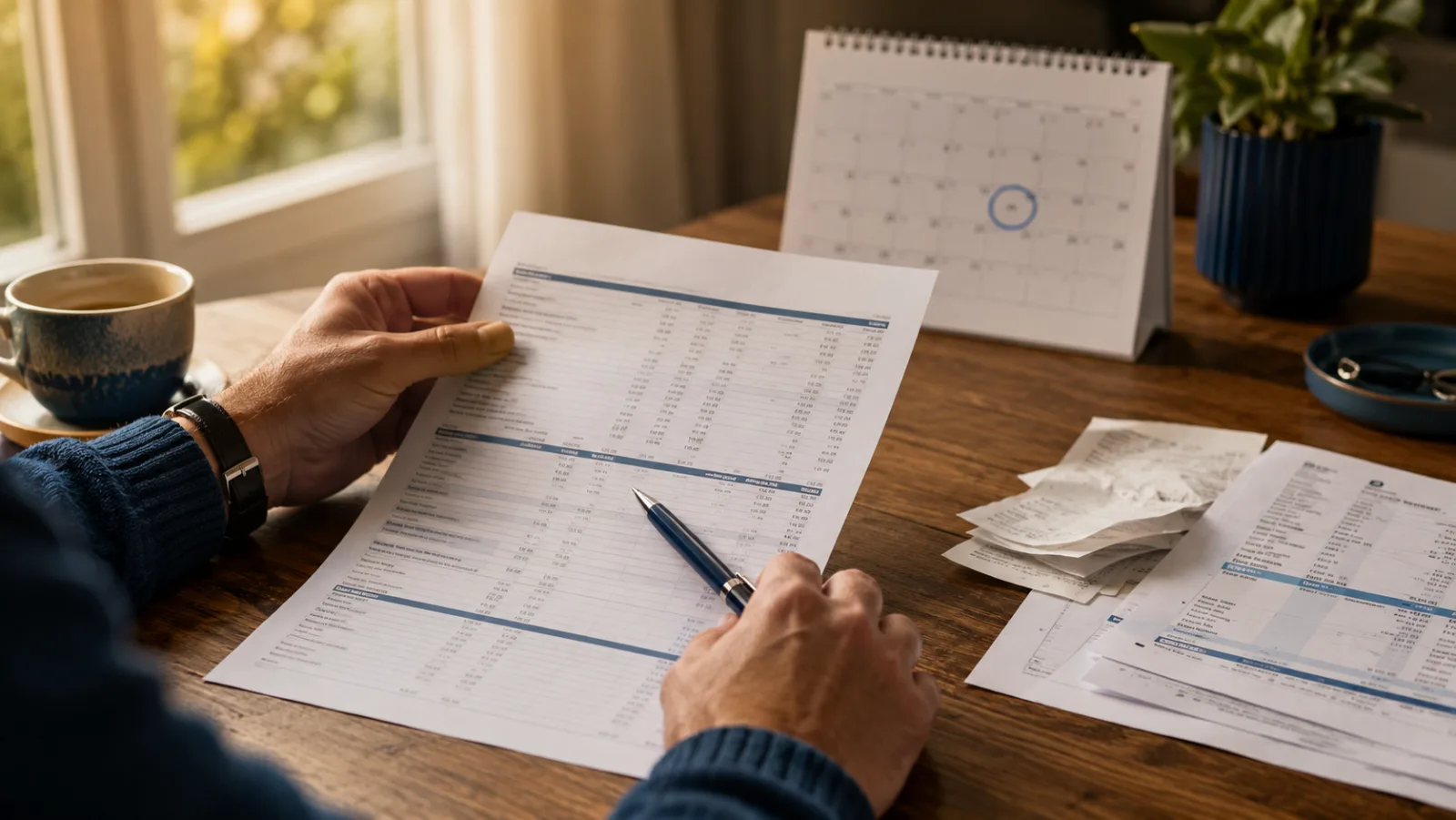
An Austrian owners' association must send its annual statement to every owner within six months of the end of the accounting period, which for a calendar year means by 30 June (section 34(1) WEG 2002). If the manager fails to deliver, any single owner can go to court, which can threaten fines of up to 6,000 euros.
For owners who live abroad, the statement is often the only yearly look at where their money went. It is worth knowing what it must contain and what to do when it does not arrive.
What the statement must show
The accounting period is the calendar year unless all owners agree otherwise in writing (section 34(2)). A usable statement lists all income and spending for the year, splits it by co-ownership share (section 32), shows what went into and out of the reserve, and ends with each owner's balance. A credit is set against future advance payments unless the owners decide otherwise; a shortfall must be paid within two months of the statement (section 34(4)). If the flat changed hands, whoever owns it when payment falls due pays, which is worth a clause in any purchase contract.
In 2026, look at the reserve line: the legal minimum rose to 1.12 euros per square metre a month on 1 January. Our article on the minimum reserve fund in Austria explains the figure.
Checking the receipts
After the statement is sent, every owner is entitled to inspect the receipts and to copies at cost (section 34(1)). Compare the three biggest items, usually heating, insurance and major repairs, with the invoices. You can ask a local friend or a lawyer to do this for you with a written authorisation.
The mistakes worth looking for are mundane. A repair invoice for one flat booked as a building cost and split across everyone. An insurance premium paid twice because the policy renewed while the old direct debit kept running. Heating costs allocated by share when the building has meters. None of this needs an accountant to spot, only the invoices and half an hour with a pencil, and raising it before the next meeting is far cheaper than a court application afterwards.
When nothing arrives
If the statement is not properly delivered or inspection is refused, the district court will order the manager to comply on the application of a single owner, under threat of a fine of up to 6,000 euros that can be imposed repeatedly (section 34(3)), in the non-contentious housing procedure (section 52(1) no. 6). If the statement is merely wrong, the court fixes the error and the correct balance. The right to a statement expires three years after the deadline.
An association that manages itself prepares the statement itself; the fine in section 34(3) targets a manager, so without one that lever does not exist. See is a property manager mandatory in Austria? for how self-managed buildings handle it.
When must the annual statement be delivered in Austria?
Within six months of the end of the accounting period, so by 30 June for a calendar year (section 34(1) WEG 2002).
What can I do if the manager does not deliver the statement?
Apply to the district court. It can order the manager to deliver and threaten fines of up to 6,000 euros, imposed repeatedly if needed.
Put 30 June in your calendar and ask on 1 July if nothing has come. Vecinly lets every owner see the entries and receipts during the year, in their own language, so the statement holds no surprises; see our page on international owners' associations.
Information updated September 2026. This article is for information only and does not constitute legal advice.
Available in 2 languages
Keep reading

Try the specialized platform for your community
Organize maintenance, communication and management easily.