France's multi-year works plan for co-owned buildings
Since 1 January 2025 every residential copropriété over 15 years old needs a plan pluriannuel de travaux, whatever its size. Two votes, one exemption, and a works fund that grows with the plan.
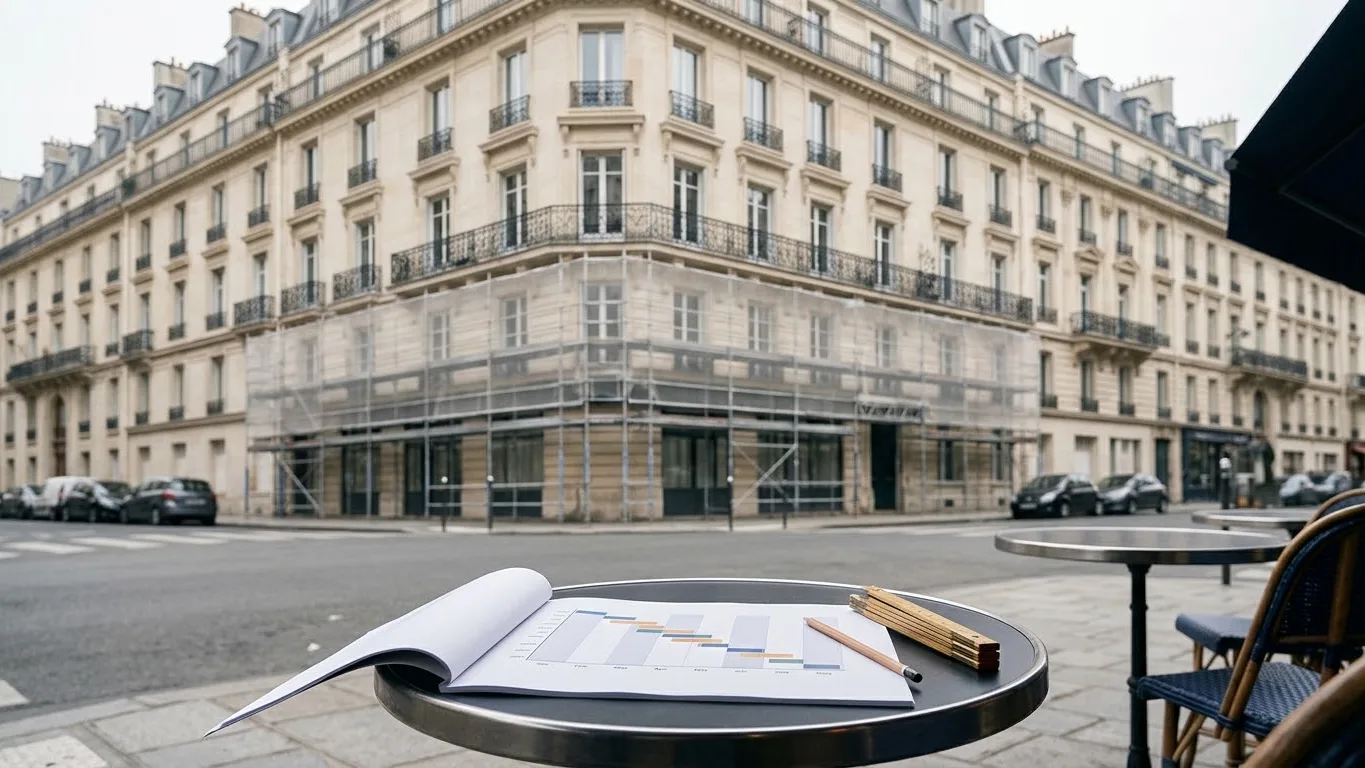
Since 1 January 2025, every French copropriété used wholly or partly as housing, in a building handed over more than 15 years ago, must have a plan pluriannuel de travaux (PPT), however many units it has. The plan covers ten years, is adopted by the general meeting by an absolute majority and is updated every ten years, as the official service-public.gouv.fr guidance on article 14-2 of the 1965 co-ownership law sets out.
Owners of a flat in France who live elsewhere usually meet it first as a line in the meeting notice.
A draft, then a plan, and two votes
The general meeting first votes, by simple majority, on how the draft (projet de plan, or PPPT) will be produced. A qualified professional then writes it (a surveying office, an architect or an energy engineer with professional liability insurance and a sworn statement of impartiality). The draft lists the work needed to preserve the building, protect occupants and improve its energy performance, with estimated costs and a ten-year timetable. The first annual general meeting after it is delivered adopts the plan, in whole or in part, by an absolute majority of all co-owners, and later votes on works follow its timetable.
| Step | Who | Majority |
|---|---|---|
| How the draft is produced | General meeting | Simple majority |
| Writing the draft | Qualified professional | None |
| Adopting the plan | Next annual general meeting | Absolute majority of all co-owners |
| Updating it | General meeting | Every ten years |
The exemption
A building is exempt if a diagnostic technique global (DTG), the full technical survey of the building, finds no work needed in the next ten years (service-public.gouv.fr). The survey has to be commissioned and paid for first, so the exemption is worth pursuing only when the building already has a recent DTG or there are good reasons to expect a clean result.
What the plan contains
The draft ranks the work by priority (short, medium and long term), gives a cost estimate for each item and proposes when each should be carried out within the ten years. It also estimates the energy performance the building could reach, which ties it to the collective energy survey many buildings already need. The plan is not a vote on the works themselves: each job is still voted when it comes up, but in the order the plan sets.
What the plan does to the works fund
Without an adopted plan, the yearly contribution to the fonds de travaux must be at least 5 % of the budget. With one, it must reach at least 2.5 % of the works in the plan, and never less than 5 % of the budget (service-public.gouv.fr). A 12-unit building in Lyon with a 24,000-euro budget and 180,000 euros of works in its plan therefore pays at least 4,500 euros a year into the fund, not 1,200: 375 euros per unit on top of running charges. How the plan is costed decides what every owner pays each year.
Check the estimates before the vote, not after.
If the plan is not sent to the authorities within a month of a request, or does not protect occupants enough, the mayor or the prefect can have it drawn up at the co-owners' expense.
Owners abroad should send a proxy to the meeting that adopts the plan: it is the vote that sets their contribution for a decade. The rules of the fund itself are in our guide to the works fund under the ALUR law.
Information updated September 2026. This article is for information only and does not constitute legal advice.
Available in 2 languages
Keep reading

Try the specialized platform for your community
Organize maintenance, communication and management easily.